Local Innovation, Global Conversations: My Experience Presenting Compass in Finland
By Chhatra Kumar Chaudhary, MIS Advisor — SUSWA
When I started building Compass, I never imagined it would one day become part of discussions in Finland or an international platform.
Compass began as a simple effort to solve practical challenges inside the SUSWA project in Nepal. I am not a software developer by profession. I simply wanted to help my team work better. What started as a small solution for our project gradually grew into something bigger than I had expected.
My recent visit to Finland allowed me not only to present Compass, but also to learn, exchange ideas, and reflect on how local solutions can contribute to wider conversations.
From a Local Challenge to a Practical Solution
My journey to Finland started with encouragement from two people. Mikaela Kruskopf from NIRAS Finland appreciated my work on Compass and suggested that I present it in person to the NIRAS Finland team. Later, during our Year 4 progress review workshop, our Chief Technical Advisor, Mario Milanesi, also encouraged me to look for learning opportunities around Finland on technology and, at the same time, visit Finland.
Their encouragement made me excited, but also uncertain. I kept asking myself:
Is Compass really ready for an international audience?
I built Compass to solve problems specific to our own project in Nepal. I am not a professional developer. Hearing that I should present it to international professionals from one of the most developed countries in the world made me wonder: is this tool really good enough? It was also my first time travelling outside Nepal, which made the moment feel even bigger. But alongside that uncertainty, I also saw it as a real opportunity to meet international development professionals, broaden my professional horizon, and explore any areas of collaboration with other NIRAS projects, especially in project data management.
Compass was built over the last three years to support the SUSWA project by keeping project information, reports, and follow-up activities in one place.
SUSWA is a Water, Sanitation and Hygiene (WASH) project supported by the Government of Finland, the European Union, and the Government of Nepal. The project works with 28 local governments across Karnali Province, with technical support from NIRAS Finland.
Compass itself was never part of the original project plan. It started because of one simple question from field staff:
“Why can’t I see my own data?”
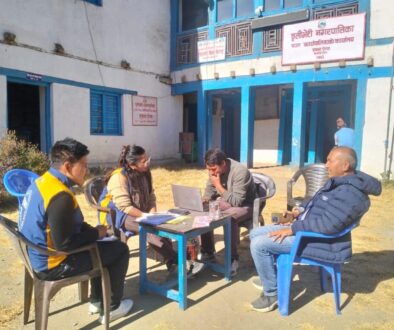
The systems we were already using were good for collecting information and sending reports to the central team, but field teams could not easily access the information they had collected and reported. There was also no simple way to follow up on field visit recommendations after reports were submitted; milestone delays became visible only during monthly meetings, and scheme construction progress was not visible to the team.
To solve these challenges, I gradually added new features to Compass, one problem at a time.
Over time, I realized these were not only SUSWA challenges. Many development projects face similar issues where information moves upward but does not always reach the people who need it most.
The Conversations in Finland
During the visit, I had the opportunity to engage with different groups, and each discussion offered a different perspective.
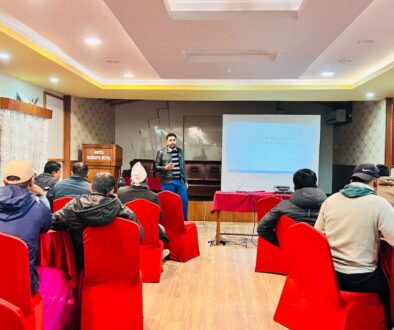
At Aalto University, I presented Compass to researchers and professors from the Water and Development Research Group. The discussion focused on sustainability and long-term use. One question stood out to me:
“What happens to Compass after SUSWA ends in 2027?”
It was a question I had already been thinking about, but hearing it from others reminded me how important long-term planning is for any digital system.
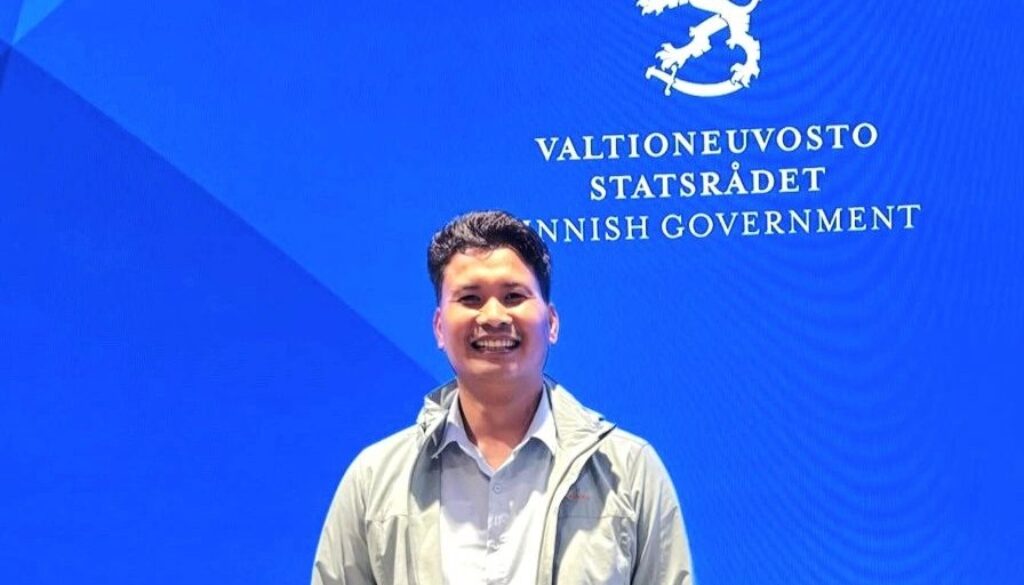
At the Ministry for Foreign Affairs of Finland, the discussion focused on practical questions. Since the Ministry funds SUSWA and will eventually take ownership of Compass, the conversation explored whether the system could be adapted for wider use and how it could continue beyond the project.
At NIRAS, the discussions were rich and practical. The team was interested in whether the same approach behind Compass could support other projects managed by NIRAS. Several important questions came up. The first was about cost: is Compass free to use? The answer is yes; Compass is available at no cost. There is no licensing cost. The second question was about how an interested organization could actually adopt it. The process starts with understanding the organization’s own data and reporting needs, mapping those needs against what Compass already offers, and identifying any gaps. Those gaps can then be filled step by step; in the same way Compass itself was built, i.e., one problem at a time. The team also asked how Compass could work alongside systems and workflows that are already in place. Compass is not designed to replace existing tools. It sits alongside them, pulling data from different sources and bringing everything into one view. Project-specific reporting requirements can be built in, so each organization sees the information that matters most to their own context. Finally, there was a question about sector applicability: is Compass only useful for WASH projects? The honest answer is no. The problems it solves are the information that does not reach the right people, action items that get forgotten after a report is submitted, and systems that do not talk to each other that exist in almost every development sector. Whether a project is working in education, health, agriculture, or governance, the coordination and accountability challenges are very similar. Compass can serve any project that needs to track activities, monitor progress, and keep teams connected around shared information.
Although the discussions were different, they all shared one common theme: how practical local solutions can create wider impact.
Reflections Beyond Technology
The visit changed the way I think about Compass.
Before travelling to Finland, I saw it mainly as a solution for specific project needs. After the discussions and meetings, I began to see it differently; not only as a tool, but also as an approach to problem-solving.
The experience also reinforced a simple idea: start with a real problem, build a practical solution, test it with real users, and continue improving it.
I also realized that digital systems only create value when the people doing the work can also access and benefit from the information. A good tool is not only about dashboards and reports; it is also about making information useful for everyone involved.
The Importance of Collaboration
This experience would not have been possible without the support of my seniors and colleagues.
Compass exists because colleagues continued using early versions and gave honest feedback. SUSWA management trusted me and allowed me to develop something that was never part of the original project plan.
The support from NIRAS Finland made this visit possible, and I deeply appreciated the openness of everyone who took the time to discuss ideas and share their perspectives.
Sometimes explaining your work to people from different backgrounds helps you understand your own work more clearly.
Looking Ahead
The visit also helped clarify the future direction of Compass.
One important priority is ensuring that the system continues smoothly after SUSWA ends in 2027. I also want to explore whether field staff can draft and submit monitoring reports offline and synchronize the submitted reports later when they are online. So that the team does not have to wait for good internet connectivity to submit important observations.
I also want to make Compass more flexible for other organizations. Right now, adding a new form or data collection template requires coding. I want to change that. My goal is to let any organization build their own forms directly inside Compass, without needing any technical support. The data submitted through those forms would flow automatically into a live dashboard, so teams can see what is happening and take action quickly.
Another important addition I am planning is a Results Framework section. I want to build a dedicated section where teams can record indicator data and view progress through clear visual charts. This will make it much easier to monitor whether the project is on track and to share results with partners and the project clients.
More importantly, I want Compass to continue serving its original purpose: helping people make better decisions by turning information into something useful and accessible.
Closing Reflection
A small tool built in Karnali Province to support a WASH project became part of a larger conversation about improving development work.
This visit was not only about presenting Compass. It was about learning, sharing experiences, and connecting with people who care about solving similar challenges.
I travelled to Finland to present a tool. I returned with new ideas, new questions, and new connections.
This experience reminded me that local ideas, when built around real problems, can also become part of global conversations.