When I graduated with a degree in Civil Engineering in 2019, I saw my future in blueprints and concrete. I wanted to build structures that lasted. However, over the last six years, my journey across the rugged terrains of Nepal has taught me that the most enduring structures aren’t made of cement; they are the systems and communities we build together.
Early Career: Building Technical Foundations (2019–2021)
My career started as a Site Engineer with Aryan Construction and Consultant Pvt. Ltd., working on the NT 4G/LTE Project in Sindhupalchowk and Nuwakot. This role strengthened my skills in site supervision, foundation works, quality control, reporting, and coordination with technical teams.
Later, I worked as a Site Engineer for the Disaster Resilient School Project in Okhaldhunga, funded by ADB and the Government of Nepal. Here, I gained valuable experience in school infrastructure, water storage systems, construction supervision, and disaster-resilient design, which marked my first strong connection with WASH-related work.
Transition to WASH Sector Expanding Field Experience and Technical Leadership (2022–Running)
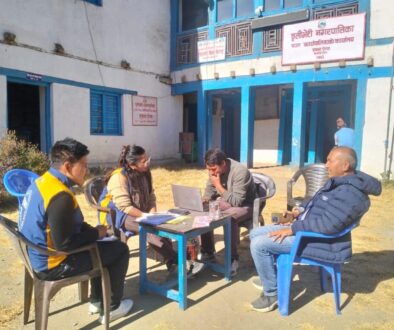
In 2022, I formally entered the WASH sector as a WASH Officer with Nepal Water for Health (NEWAH) in West Rukum, Salyan, and Baglung. I worked closely with local governments to support WASH Plan preparation, data collection through NWASH-MIS, ward-level planning, and project prioritization. This role helped me understand local governance systems, community engagement, and evidence-based planning, and it confirmed my passion for sustainable water and sanitation services. Besides this, I worked as a WASH Engineer and Consultant with multiple organizations, including NEWAH, DWSSM, Chay-Ya Nepal, and KIRDARC.
I supported feasibility studies, water source yield measurements, cost estimations, and WASH planning across Karnali, Gandaki, Madhesh, and Koshi Provinces. I also contributed to WASH in Schools (WinS), post-disaster damage and needs assessments, and integration of climate change adaptation and disaster risk reduction (DRR) into WASH planning.
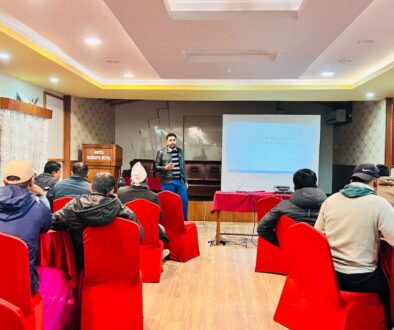
Additionally, I served as a NWASH-MIS Trainer, supporting eight local governments in Madhesh Province, which strengthened my role as a capacity builder and trainer for municipal staff.
The year 2025 brought me to the Sustainable WASH For All (SUSWA) project. Here, my journey took its most significant step. As a WASH Advisor for Thulibheri Municipality and Shey-Phoksundo Rural Municipality, Dolpa, my work shifted toward systems strengthening. It wasn’t just about pipes; it was about supporting Municipal WASH Units, mainstreaming climate change resilience, and ensuring that ‘Human Rights/Gender Equality Disability and Social Inclusion’ wasn’t just a buzzword, but a reality.


Working in Remote and Geographically Challenging Contexts
Shey-Phoksundo Rural Municipality, home to the iconic lake and towering elevations up to 7,425m in Karnali Province, represents Nepal’s most challenging yet breathtaking landscape. Despite its profound geographical hurdles, which demand multi-day treks as part of development work, the region is actively pursuing progress. The SUSWA project (Sustainable WASH for All), strengthening the Water, Sanitation, and Hygiene (WASH) sector to bring essential services and resilience to the remote communities of Dolpa.
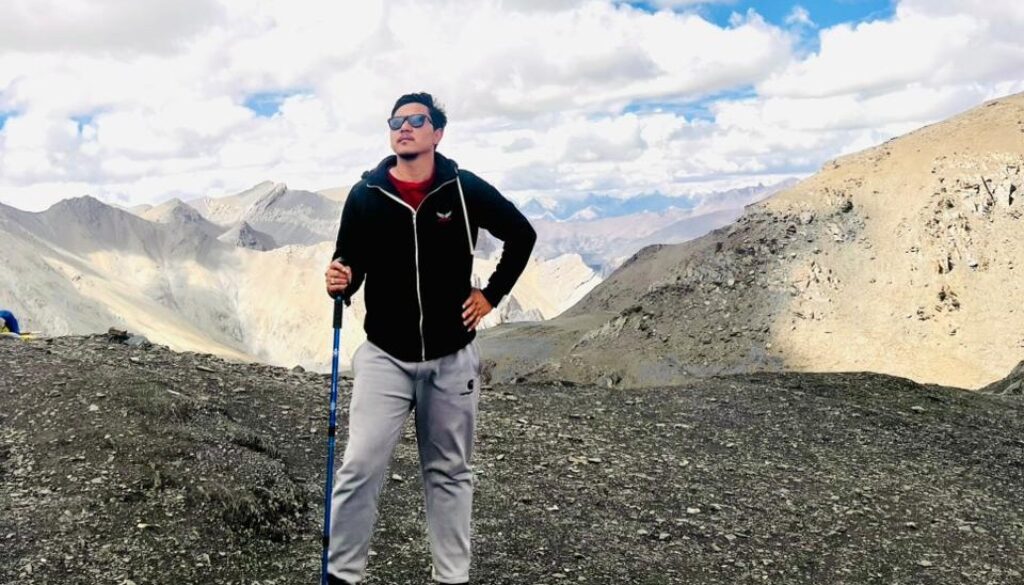
Working in Shey-Phoksundo Rural Municipality has been one of the most humbling experiences of my life. When I was first assigned to work in this Palika, I felt proud and excited. Earlier, my only dream was to visit Phoksundo Lake as a student, but life gave me something more meaningful: the opportunity to serve the people there. Traveling for the first time with Palika stakeholders was both exciting and nerve-racking. Questions filled my mind: how would we reach the upper areas, where would we stay, and how would we manage? With no road access, the journey meant walking for four to five days, sleeping in tents along the way.
At times, the journey felt overwhelming. Carrying supplies, walking narrow mountain trails, and adjusting to harsh weather tested both physical and mental strength. There were moments when I wondered if this was truly the place I had once dreamed of visiting. But after days of walking, we finally reached our destination. The exhaustion slowly turned into joy, laughter, and unforgettable memories. That long journey became one of the most enriching experiences of my life. I felt truly blessed to be part of the SUSWA project, alongside NEWAH, working in the WASH sector in such a remarkable landscape.
In Upper and Lower Dolpa is often a rugged mountain trail. With no road access to many wards, traveling on foot for days is part of the job. Despite these challenges, the impact of the work feels deeply rewarding. I was able to conduct WASH strengthening assessments across the rural municipality. This place taught me resilience, gratitude, and the true meaning of field-based development work.
Working as a WASH Advisor with the SUSWA project has been a truly rewarding experience for me
Supporting municipalities in planning, coordinating, and implementing WASH activities allows me to contribute directly to improving services at the local level. I value the opportunity to work closely with M-WASH Units, partners, and communities in monitoring projects, strengthening systems, and promoting inclusive decision-making through GEDSI principles. Facilitating coordination platforms and supporting climate-resilient WASH planning has helped ensure that our efforts are sustainable and responsive to local needs.
What makes SUSWA special to me is the collaborative team environment where knowledge sharing goes both ways. I am grateful to share my experience with municipal staff, WUSCs, and WASH actors while continuously learning from their practical insights and dedication. This project has supported my professional growth and reinforced my commitment to building resilient, inclusive, and sustainable WASH systems that truly serve communities.

The Heart of Remote WASH: Challenges and Lasting Lessons
My journey revealed that building enduring infrastructure means strengthening the human and governance systems that sustain it. Working across Nepal’s remote, geographically challenging terrains, culminating in the multi-day treks of Shey-Phoksundo, proved that physical isolation is the greatest hurdle in WASH. This environment demanded profound personal resilience, shifting the focus from simply pouring concrete to mastering logistics, adapting technical designs for road-less areas, and utilizing tools like NWASH-MIS for evidence-based planning.
The most valuable lesson is that true development is achieved through capacity building and mainstreaming. My experience evolved from technical site supervision to supporting local governments as a WASH Advisor, focusing on municipal units, climate resilience, and inclusion. This pivotal shift confirms that lasting impact isn’t defined by the pipe network installed, but by the strengthened community bonds and local governance structures that ensure sustainable, resilient, and equitable water and sanitation services for all.
Looking Ahead
From technical engineering work in 2019 to municipal WASH advisory support under SUSWA in 2025, my perspective has fundamentally changed. Engineering provided the tools, but the community provided the purpose. My journey has been shaped by field experience, community engagement, and continuous learning. I remain committed to strengthening local government capacity, promoting inclusive WASH services, and contributing to safe, resilient, and sustainable water and sanitation systems across Nepal. I am more committed than ever to strengthening the local systems that make sustainable change possible.