Community ownership and local government support restore water services after a landslide
At around midnight on 20 July 2026, heavy rainfall triggered a landslide in Bhagawatimai Rural Municipality–6, Dailekh, damaging the main pipeline and several structures of the Bukumul Dunibata Water Supply Scheme. Around 35 metres of pipeline were destroyed, disrupting water services for approximately 30 households in the affected cluster.
The scheme has been providing safe drinking water services to 166 households and was originally supported by the Rural Village Water Resource Management Project (RVWRMP) from FY 2018/19. During FY 2025/26, members of the Water Users and Sanitation Committee (WUSC) received capacity-building support on all eight modules under the Sustainable WASH for All (SUSWA) Project through the Service Support Center (SSC) approach.
From damage to action
Following the landslide, WUSC did not wait for outside intervention. It immediately called an emergency mass meeting to assess the damage and decide on the next steps.
Following the committee’s decision, the Policy Post conducted a site inspection and prepared a damage assessment report. The WUSC then formally approached the Rural Municipality, requesting immediate repair and maintenance support, including technical and material assistance.
The Local Government responded by providing 35 metres of replacement pipeline. The WASH Unit/SSC provided technical assistance for the installation and conducted field visits to support and monitor the repair work.
The damaged pipeline was replaced, and the water supply system was restored. Water is now flowing normally from all taps, allowing the affected households to resume regular access to safe and reliable water services.
The rapid response demonstrated the value of having a trained WUSC, a responsive Local Government, and an institutionalised SSC mechanism working together.


Community ownership in practice
The experience of Bukumul Dunibata is part of a broader effort by Bhagawatimai Rural Municipality to strengthen the operation and maintenance of its water supply schemes.
During FY 2082/083, two additional schemes were successfully repaired and maintained through a 50:50 cost-sharing arrangement between the WUSCs and the Local Government:
- Bhakkemula Khar DWSS, Ward No. 1, serving 46 households.
- Thulopaganth MUS Scheme, Ward No. 1, serving 69 households.
In Bhakkemula Khar, all 46 households independently invested in constructing private household taps, demonstrating strong community ownership and commitment to maintaining reliable water services.
Following the completion of the repair and maintenance work, the Bhakkemula Khar community was declared a Total Sanitation Community, reflecting improved access to reliable water services, strengthened hygiene practices, and greater community ownership of WASH services.
From project support to local ownership
The repair and maintenance activities were monitored by the Deputy Team Leader, WASH Advisor, and Service Support Center Facilitator (SSCF) from SUSWA, who provided technical guidance and emphasised sustainability, community ownership, and reliable service delivery.
According to the NWASH database, Bhagawatimai Rural Municipality has 60 water supply schemes. The municipality has demonstrated strong institutional ownership by implementing the Operation and Maintenance Guidelines through the SSC approach and assigning a permanent municipal staff member as the SSC Focal Person.
Through the SSC, WUSCs receive continuous support in scheme registration, water quality testing, tariff collection, operation and maintenance, emergency repairs and capacity building.
This is helping to shift water supply management from a project-dependent model towards a locally owned and continuously supported service delivery system.

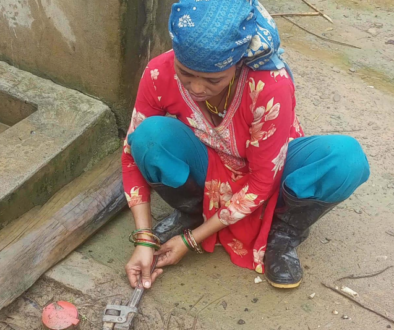
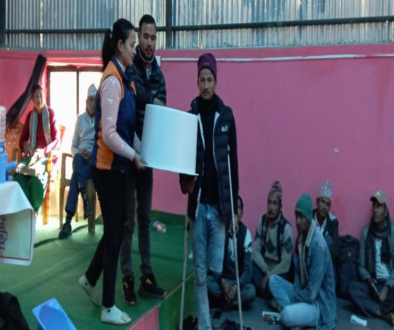
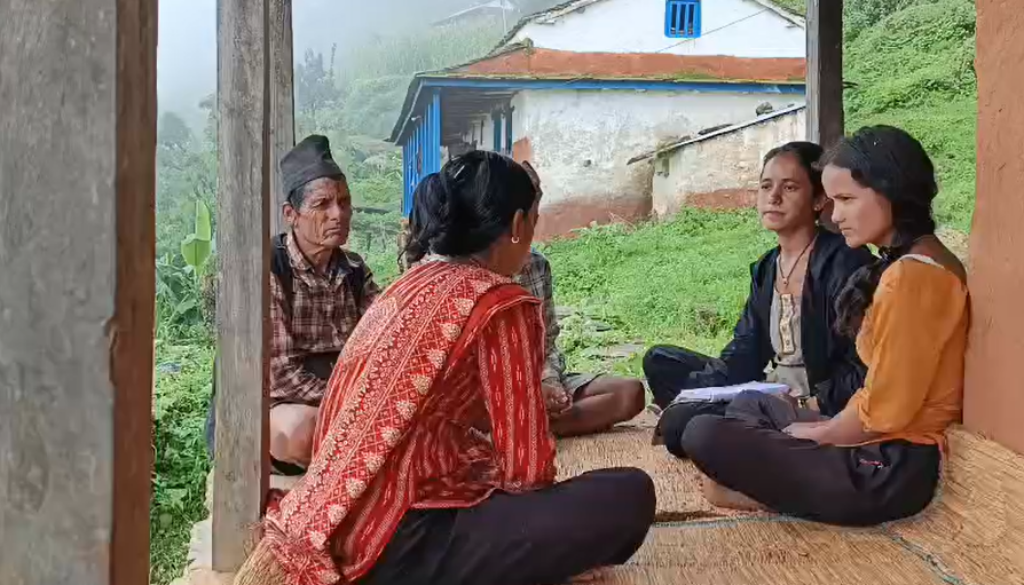
Some photos of the scheme area and meeting with WUSC members
A model for sustainable WASH services
The experience of Bhagawatimai shows that sustainability is not only about building infrastructure; it is also about ensuring that communities and Local Governments have the capacity, systems and ownership to keep services functioning.
When a landslide disrupted water services, the WUSC knew how to respond, the Local Government provided the necessary resources, and the SSC provided the technical support needed to restore the system.
The result was more than a repaired pipeline. It was a practical demonstration of a functioning community–Local Government–SSC partnership, helping ensure that water services remain safe, reliable and sustainable beyond the lifetime of the project.