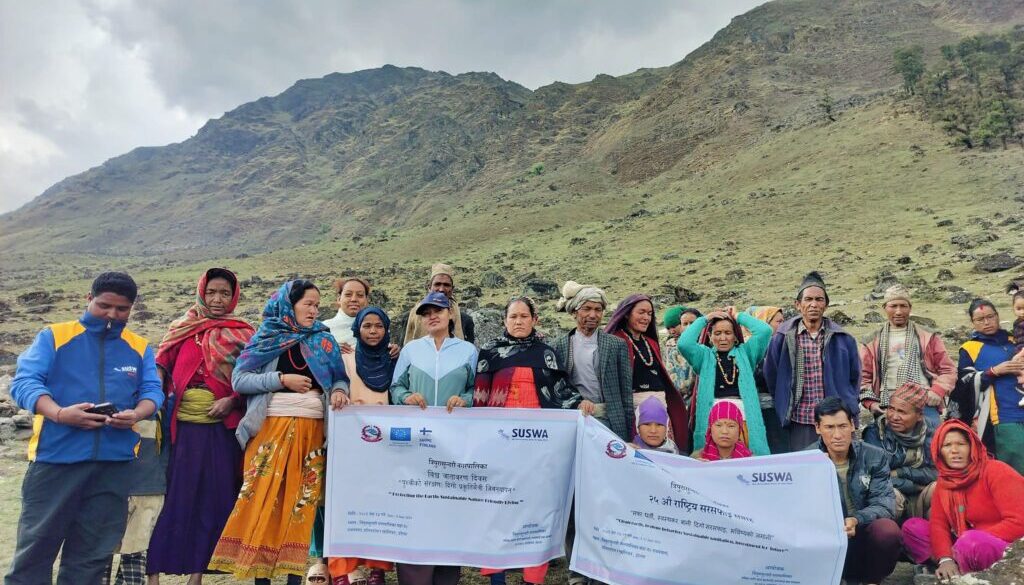
This year, 2024, marked the 25th celebration of National Sanitation Week in Nepal. National Sanitation Week is an annual event starting on June 5th, coinciding with World Environment Day. This celebration began in 2000 AD when only 24% of the population had access to toilets. Over the years, the event has played a crucial role in mobilising stakeholders from various sectors to commit to and contribute to the cause of sanitation under the slogan, “Sanitation for all, All for sanitation.”
Thanks to the collective efforts of a wide range of stakeholders and the leadership of the Government of Nepal, the country achieved the status of being the first “Open Defecation Free (ODF) Country” in South Asia on September 30, 2019. This milestone has paved the way towards achieving “Total Sanitation” in Nepal. According to the National Sanitation and Hygiene Master Plan of Nepal, total sanitation is defined as “all arrangements leading to sustainable hygiene and sanitation facilities and behaviours.” The Total Sanitation Guideline 2073 BS (2016 AD) further elaborates total sanitation as “The condition of attaining clean and hygienic conditions, including but not limited to access to safe water, access to toilets for all, personal hygiene, food hygiene, household and institutional sanitation, and environmental sanitation.”
SUSWA has prominently focused on ensuring access to basic and improved sanitation facilities. During its project period, SUSWA has targeted to provide basic sanitation facilities to 23,961 households and handwashing facilities with soap and water to 30,567 households. Additionally, SUSWA aims to ensure that 15,817 households comply with total sanitation indicators.
Aligning with the government of Nepal’s Total Sanitation Guidelines of 2016 AD, SUSWA has adopted objectively verifiable indicators under each major and sub-indicator included in the government’s guidelines. These indicators are:
- Access to a safe toilet
- Personal hygiene and handwashing
- Safe drinking water
- Food hygiene
- Household and institutional sanitation
- Environmental sanitation

The slogan for this year, 2024, is “सफा धर्ती, स्वस्थकर बानी; दिगो सरसफाइ, भविष्यको लगानी” (Clean Earth, hygienic behavior; Sustainable sanitation, investment for the future). This theme emphasises the importance of environmental sanitation and hygiene behaviour in achieving total sanitation. It highlights that investing in sanitation and hygiene is an investment in the future, contributing positively to the growth and development of children, the future pillars of the nation.

The Karnali region, which lags in human development indicators and multi-dimensional poverty indicators compared to other provinces, has been a champion in ensuring ODF status in Nepal. All districts in Karnali declared themselves ODF in June 2018, well before Nepal’s nationwide declaration. However, government data indicates a slippage rate of 4.5% of households with no toilets, with some studies suggesting this rate could be as high as 11%.
Together with the government at all levels, SUSWA is working towards total sanitation in compliance with established policies and strategies. SUSWA has developed tailored manuals and tools, including total sanitation training manuals, flip charts, sanitation marketing, and reinforcement tools. The capacity-building efforts at the local level have shown evidence-based results, showcasing a brighter future for the sanitation and hygiene sector in Nepal.
Govinda Rokaya
Sanitation and Hygiene Specialist