In Dolpa’s rugged terrain, where geography often challenges service delivery, progress in inclusive WASH is becoming increasingly visible, not only in infrastructure, but also in systems, documentation, and community ownership. Through the recent GEDSI (Gender Equality, Disability and Social Inclusion) Audit, SUSWA team members Rita Khadka and Akshay Singh Thakuri reflected on how earlier gaps are gradually transforming into stronger, more inclusive, and sustainable WASH services across the Dolpa Cluster.
Rita Khadka, GEDSI Compliance Monitoring Officer
I have a unique and deep connection with Dolpa. During our first GEDSI Audit, I observed significant gaps. Although considerable work had been done, documentation was often incomplete or missing, and many plans were verbal rather than written. While communities had invested immense effort and faced real hardships, their contributions and challenges were not always reflected in records.
We saw physical structures, such as public toilets, that had been built but remained non-functional. While water had successfully reached households, the integration of GEDSI principles into systems and documentation remained weak. The initial audit findings reflected this clearly, with many areas marked as ‘No’ and ‘Partially Achieved.’ For example, women were visibly active in implementation, such as digging trenches and supporting construction, yet their participation was rarely captured in formal records.
These findings were shared with the Local Governments (LGs), where we engaged in constructive discussions to identify practical solutions. Their commitment to implementing the recommendations was encouraging, and the results during our recent visit were truly rewarding.
What we previously identified as challenges have now started transforming into inspiring progress stories.
This recent audit process was remarkably smooth and efficient. In earlier visits, community queries and operational concerns often made it difficult to fully focus on compliance monitoring. This time, having dedicated support during scheme visits made a significant difference.
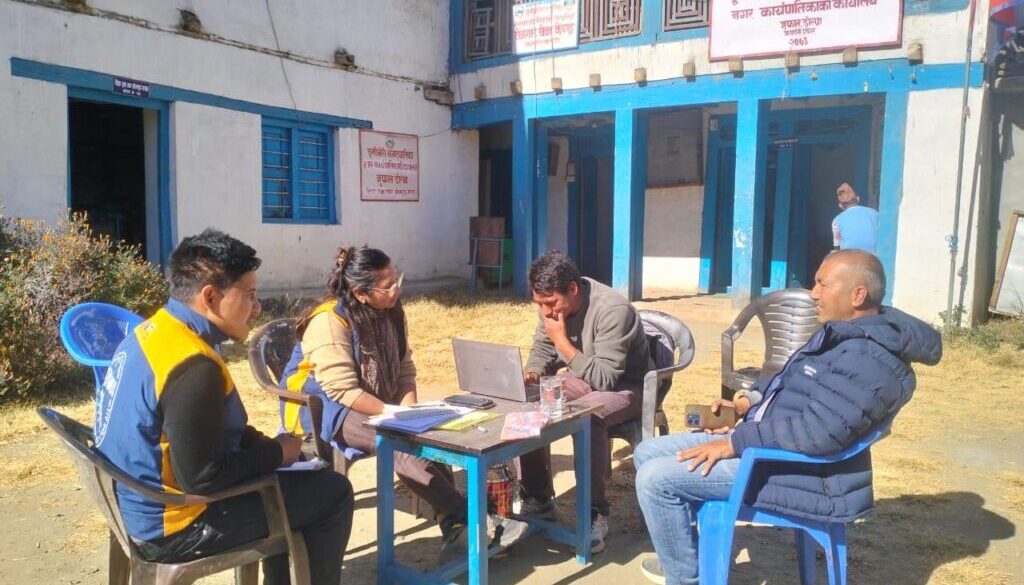
The Dolpa Cluster Advisor, Akshay Singh Thakuri, accompanied me throughout the field verification. His familiarity with the geography, local context, and communities was invaluable. While he addressed technical concerns and community interactions, I was able to focus on GEDSI compliance, documentation, and verification.
Together, we reviewed whether earlier recommendations had been implemented and whether scheme records were properly updated. We found that documents were readily available across schemes, and communities demonstrated a clearer understanding of the project and their responsibilities. During cross-verification, there was strong consistency between documented records and realities on the ground.
This reflected meaningful progress at the Local Government, community, and institutional levels—marking a successful step forward in strengthening GEDSI compliance across the Dolpa Cluster.
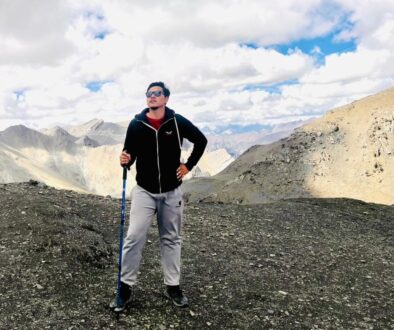
Akshay Singh Thakuri, WASH Advisor
There is a significant difference between reading about GEDSI compliance in project documents and observing the reality on the ground. As an Advisor, my priority is to help bridge this gap and ensure that inclusion is achieved in practice—not just on paper.
As the Advisor for the Dolpa Cluster, I recently had the opportunity to conduct a comprehensive field visit to Thulibheri Municipality, Shey Phoksundo Rural Municipality, Tripurasundari Municipality, and parts of Mudkechula.
From an engineering perspective, this journey provided valuable insights into both older water supply systems and ongoing fast-track schemes.
While the older water supply systems in Thulibheri Municipality remain operational, they clearly require rehabilitation to sustain long-term service delivery. In contrast, the Water User Committee in Tripurasundari demonstrated a strong understanding of system management and maintenance, which is essential for sustainability.
I was particularly encouraged to see the practical integration of GEDSI principles within infrastructure development. Visits to public and institutional toilets in Dunai, Chhala, and Jufal showed that facilities are being designed with genuine inclusiveness for women, children, and persons with disabilities. Community participation was also notably strong—meaningful rather than symbolic.
At the same time, challenges remain. Some vulnerable households continue to face financial and technical barriers, reinforcing the need for flexible, context-specific engineering solutions tailored to remote settlements.
Collaboration with local governments was highly encouraging. Their commitment to integrating GEDSI into WASH planning was visible through Gender Responsive Budgeting (GRB), inclusive policies, and institutional frameworks.
It was encouraging to see that all Palikas have now established inclusive frameworks such as the WASH Act, GEDSI Policy, DMM Policy, and gender-responsive and disability-inclusive plans. Many of these policies are also publicly accessible, strengthening transparency and accountability.
Another positive shift was the visible involvement of Organizations of Persons with Disabilities (OPDs). Their participation is no longer limited to planning discussions; their engagement is increasingly reflected in monitoring, feedback, and local-level decision-making. This was evident through monitoring records, scheme verification, and accessibility audits.
As part of the ongoing process, we are also supporting the implementation of Gender Responsive Budgeting coding in SUTRA across Palikas in line with the Ministry of Finance (MoF) guidelines. We continue to verify whether GEDSI focal persons and GRB focal points are coordinating effectively throughout this process.
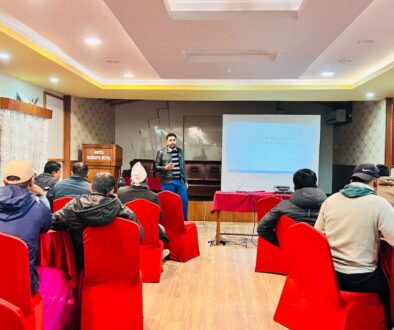
During community engagement, it was heartening to see people openly sharing their concerns, experiences, and feedback. This reflected growing trust, stronger local ownership, and an inclusive environment for dialogue.
Although Dolpa’s terrain and remoteness continue to create challenges for service delivery and monitoring, these realities remind us of the importance of adaptable and locally appropriate technical solutions.
I would also like to acknowledge the proactive role of the WASH Unit. Their strong coordination with beneficiaries and local government stakeholders made this process smooth, collaborative, and truly participatory.
This experience reinforced a key lesson: combining technical expertise with social inclusion, local ownership, and strong governance is essential for ensuring lasting and sustainable WASH services for the people of Dolpa.