“There was a time when people looked down on us because we were Dalit and believed they should not drink water touched by us. Today, everyone drinks the water from the system I help maintain. I feel that discrimination has decreased. This is one of the greatest joys of my life.”
For Lalita Sunar of Budhakafal, Darma Rural Municipality–3, water has become more than a basic service. It has become a symbol of dignity, inclusion and change.
Once confined largely to household responsibilities, farming and caring for her children, Lalita is now a trained Village Maintenance Worker (VMW), responsible for the operation and maintenance of a community water supply scheme serving 51 households. Her journey shows how an opportunity, combined with skills and support, can transform not only a woman’s life but also the way a community sees her.
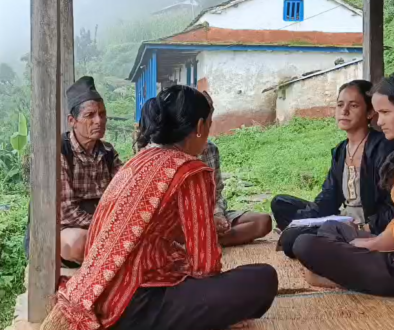
In FY 2080/81, Darma Rural Municipality, in partnership with the Sustainable WASH for All (SUSWA) project, implemented the Magarkhola–Budhakafal Water Supply and Sanitation Scheme. In line with the project’s commitment to inclusive participation, the scheme required a woman to be selected as a VMW. During a community assembly, Lalita was chosen for the role.
The opportunity came with uncertainty.
At home, questions were raised about whether a woman could manage the responsibilities of maintaining a water supply system alongside her household duties. Her husband, who was working abroad, initially questioned the value of her attending the training. Some community members also doubted whether she could handle what they considered to be technical work.
Lalita herself had never imagined taking on such a role.
Her family depended largely on farming, which was not enough to meet their needs throughout the year. Financial opportunities were limited. Yet, behind her quiet daily routine was a desire to do something more.
Learning to say, “I can do it too”
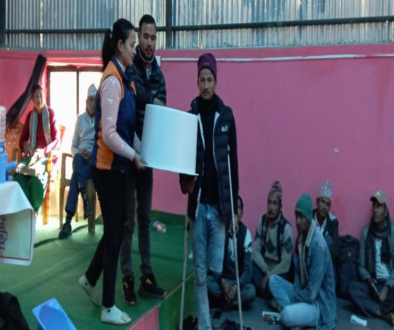
Lalita took the opportunity to participate in a 10-day VMW training organised at the municipal level. Four women and 16 men participated in the training.
Under the guidance of trainer Dirgha Narayan Pandey, she learned how to repair damaged pipes, operate valves, read water meters, manage the correct dosage for in-line chlorination and protect the water supply system from its source to the household tap.
The training also strengthened her practical knowledge of total sanitation and menstrual hygiene management.
More importantly, it changed the way Lalita saw herself.
“That was when I started believing that I could do it too.”
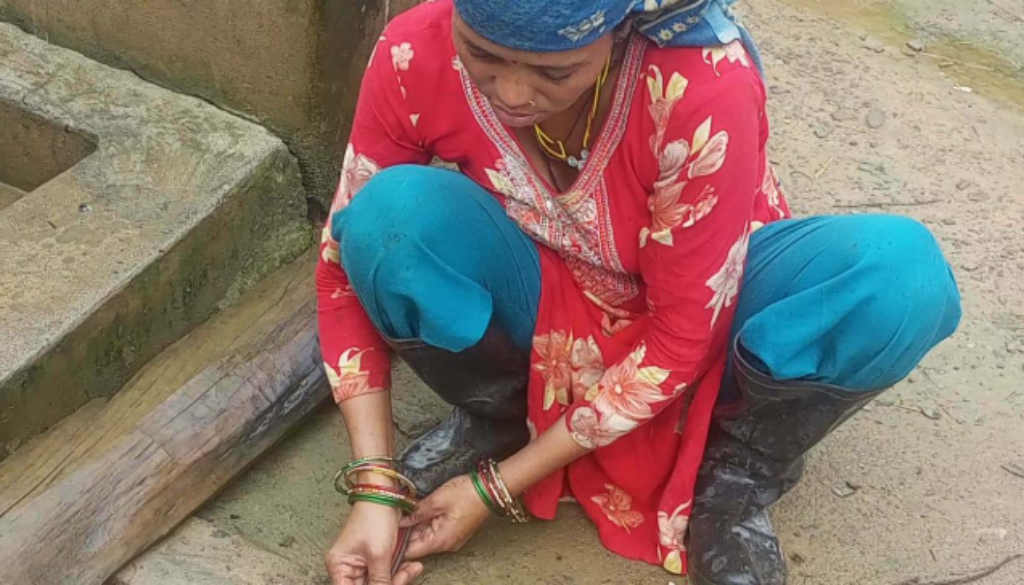
Today, Lalita manages the daily operation and maintenance of the scheme. She opens and closes the water supply at the appropriate times, monitors the system and arranges additional water when needed for community events such as weddings and religious ceremonies.
When she identifies problems along the system, she addresses them herself whenever possible. If a problem requires additional support, she informs the Water Users and Sanitation Committee.
“The scheme feels like my own now. I feel proud when I see water reaching every household. Keeping the community satisfied has become my responsibility.”
Water that is changing perceptions
For Lalita, the most significant change is not only the water reaching people’s homes, but also the change in attitudes within the community.
As a Dalit woman, she experienced social discrimination and exclusion. Today, she helps operate a water system whose services are used by everyone in the community.
The transformation is deeply meaningful to her.
“There was a time when people looked down on us because we were Dalit and believed they should not drink water touched by us. Today, everyone drinks the water from the system I help maintain. I feel that discrimination has decreased. This is one of the greatest joys of my life.”
Her role as a VMW has therefore become more than a technical responsibility. It has created a space where her skills, work and contribution are recognised and valued by the wider community.
From opportunity to independence
Lalita still finds reading the water meter somewhat challenging, but her daughter supports her when needed.
Each household contributes NPR 100 per month towards the water service, while Lalita receives NPR 3,500 per month for her work as a VMW.
For Lalita, this income has made a meaningful difference.
“Earning NPR 3,500 a month while living and working in my own community has been a great help with household expenses. The opportunity provided by SUSWA has helped me become more independent.”
Today, water users appreciate Lalita for her honesty, hard work, and sense of responsibility. She remains committed to regular maintenance and protection of the scheme to ensure that it continues to provide reliable water services to the community.
A role that goes beyond maintenance
Lalita’s story demonstrates that a VMW is more than someone who repairs pipes or operates a water system. With the right training, trust and opportunity, a local woman can become a skilled service provider, an income earner and a respected community leader.
Her experience also shows how inclusive WASH programming can contribute to wider social change. When women and people from historically marginalised communities are given opportunities to participate in technical and decision-making roles, they can help make services more inclusive, locally owned and sustainable.
Lalita’s journey began with an opportunity that many doubted she could take. Today, she is helping keep her community’s water flowing, earning an income and challenging long-standing social attitudes.
Her story is a reminder that when people are trusted, supported, and given an opportunity, they can change not only their own lives, but also the communities around them.