
As I pause for a moment to reflect on this incredible journey, my heart swells with a deep sense of gratitude. It’s not just for the milestones achieved, but for the profound lessons, the incredible people, and the unwavering purpose that have sculpted who I am today.
A Personal Reflection
When I first stepped into the development sector, I was a young woman with a heart full of passion, yet little understanding of the immense depth and complexity this work would entail. Over the years, I have been humbled time and again by the sheer strength of communities, the inspiring resilience of women, the unfiltered honesty of children, and the transformative power of inclusion. I’ve learned that true, lasting change doesn’t materialize in echoey conference halls or on pristine documents. It blossoms in the everyday conversations, on the dusty trails we walk, and in the bedrock of trust painstakingly built over time.
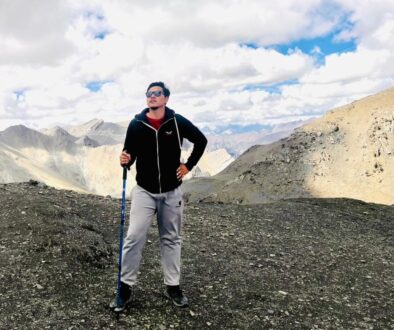
My name is Rita Khadka, and I am a GEDSI Compliance Monitoring Officer for SUSWA. My roots are in Dadeldhura district, Sudurpaschim Province-7. This is the story of my GEDSI Audit in Karnali, within SUSWA’s working area.
From the familiar landscapes of Sudurpaschim Province to the wild beauty of Karnali, from district coordination meetings to rigorous GEDSI audits across an entire province, every single step of my journey has been a powerful learning experience. I’ve been privileged to serve in various roles with esteemed organizations like the Nepal Red Cross Society and Save the Children, and now with SUSWA. My focus areas are broad and vital: inclusive WASH, Inclusive Disaster Risk Reduction (DRR), Gender Equality, Disability and Social Inclusion (GEDSI), Protection, Gender and Inclusion (PGI), and Community Engagement and Accountability (CEA).
I’m also a “master simulator” for disasters, earthquakes, landslides, floods, and fires. I’ve conducted simulations at every level: province, district, community, and school, empowering people with critical preparedness and response skills. Beyond that, I am a writer. Many of my articles on women’s issues, rights-based approaches, human interest stories, and organizational reflections have found their way into national and local newspapers.


A Development Sector Worker from Dadeldhura
Life has offered me many identities. I am a wife and a proud mother of two beautiful children; our family makes our home in Mahendranagar, Kanchanpur, in Nepal’s far-western Sudurpaschim Province. Though my current work takes me across Karnali, my earliest memories and schooling trace back to Dang in Lumbini Province, where I was born. My mother still lives in Dang, while my father has sadly passed. My two married sisters are happily settled there, and my younger brother and his wife live in the United States of America. In our culture, it’s customary for a married daughter to begin a new life in her husband’s home, a tradition that weaves together family bonds and societal expectations.
During my college years, my friends knew me as a passionate and outspoken Radio Jockey. I loved hosting programs and discussing trending social issues. Alongside my studies, I tutored underprivileged students and worked part-time as a teacher. Writing has always been a sanctuary for me; I often contributed articles on issues close to my heart.
After completing my Master’s degrees in Rural Development and Sociology, life became more challenging, yet infinitely more meaningful. Balancing motherhood, work, and higher studies was an immense juggling act. There were moments when I felt utterly overwhelmed, but somehow, I managed to hold everything together. My career path has seen its share of twists and turns. After the birth of my children, I consciously chose to step back from my professional life for a while, dedicating myself to motherhood. I cherished those years, believing that motherhood isn’t a pause, but a powerful, transformative chapter in a woman’s life.
When my children started school, I re-entered the workforce with renewed energy and a sharpened sense of purpose. My children remain my greatest source of strength and motivation. Inspired by them and by the injustices I witnessed, I began writing and speaking even more boldly on child rights, women’s rights, gender-based violence, and giving voice to the survivors and victims who are all too often ignored. Today, most people recognize me as a dedicated professional in the development sector.
I bring over eight years of experience in development, particularly in Inclusive Disaster Risk Reduction, Protection, Gender and Inclusion, Community Engagement and Accountability, Gender Equality, Disability and Social Inclusion, Emergency Response Operations, and WASH. Most recently, I spent four years with the Nepal Red Cross Society before joining the SUSWA project. Each project, whether focused on emergency response or long-term resilience, has deepened my conviction in the power of community-led development. Every field visit, every training session, every audit has not only honed my skills but also solidified my commitment to leave no one behind.

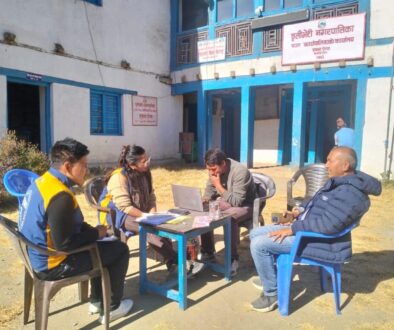
GEDSI Auditing at Humla

Cross verification during GEDSI auditing
Karnali:
There’s simply no comparison between Upper Karnali and Lower Karnali.
In Upper Karnali, life is incredibly arduous. Facilities and services are desperately limited.
Yet, when I arrive at a scheme site for a GEDSI Audit, people often recognize the SUSWA logo before I even introduce myself. They gather, their faces lighting up with smiles, offering heartfelt thanks. Their tired, yet warm faces, their innocent eyes, and their genuine words fill me with an overwhelming sense of joy because it’s a stark reminder of how far SUSWA’s reach extends.
The work here is profoundly visible, and being part of the team that audits and witnesses this progress on the ground makes me truly proud. Listening to people’s stories, hearing their voices, and feeling their gratitude is deeply, deeply rewarding.
“Through My Eyes: Upper Karnali”
Upper Karnali is a world unto itself. Life here unfolds between towering, snowcapped peaks and plunging valleys, in villages perched precariously on rugged ridges where snowfall can linger for eight months of the year. The remaining four months, that’s when everything must happen: construction, planning, training, and change.
But reaching these places is an epic challenge. With no proper roads in many areas, you trek for hours, sometimes days, through dizzying elevations, dense forests, and narrow cliffside trails, just to reach a single settlement.
Here, safe water, safe toilets, and menstrual hygiene aren’t simple conveniences; they are daily struggles, often agonizingly out of reach. In some villages, I found no toilets at all. In others, they stood far from homes, often without water for handwashing. In these remote corners, even basic hygiene was a privilege, not a right.
And yet SUSWA reached there. When I visited these same places for GEDSI auditing, I could feel the difference and the profoundness.
- Where once there was nothing, now stood CGD-friendly/user-friendly toilets.
- Where water once came from melted snow, now taps flowed at household doorsteps.
- Where silence once prevailed– women, Dalits, janajati, and marginalized voices were now being heard, loud and clear, in WASH committees.
These aren’t just numbers in a report. They are visible, tangible, life-changing improvements. And I feel an immense pride in being part of a team that helped make them real.
Photographs from this journey carry more than just memories. They tell stories, stories of women masons breaking barriers, adolescent girls finding their voices, persons with disabilities demanding access, and local governments embracing inclusive planning. These moments remind me that impact is visible not only in statistics but in dignity restored and opportunities created.
“Through My Eyes: Lower Karnali”
Compared to Upper Karnali, facilities and accessibility in Lower Karnali are significantly better. Working conditions are easier, transportation and materials are more readily available, and quality assurance feels more achievable. When we talk about remoteness, Lower Karnali doesn’t feel as isolated; people’s daily lives are relatively more comfortable. In every meeting, I see strong women’s participation in attendance, in leadership, and in decision-making. They speak confidently for themselves.
Within our working areas, we engage both near the municipal centers and in the more remote sections. Even in Lower Karnali, not all schemes are accessible by road; some require hours of walking. I’ve reached those places too, conducting GEDSI audits, listening, and learning from the communities.
Walking with the GEDSI Audit Checklist in Karnali: My First Audit Journey
One of the true pillars of SUSWA’s strength is the GEDSI Audit Checklist. While it might appear to be just another monitoring tool, in my hands, it transformed into a personal compass, guiding me through a profound journey that was as much about connecting with people as it was about analyzing numbers. The primary objective of the GEDSI Audit is to serve as a structured compliance monitoring process. It’s meticulously designed to assess precisely how effectively GEDSI principles are being integrated into crucial WASH interventions across three levels, yet interconnected, levels: the grassroots water supply scheme/community level, the institutional toilet/facility level, and the overarching local government level. This audit is far more than a mere data collection exercise; it is a powerful catalyst for evidence-based learning, fostering accountability, and enabling adaptive management. Ultimately, it helps ensure that the project not only achieves its seven critical GEDSI-focused result indicators but also successfully mainstreams GEDSI across all outcome areas, truly leaving no one behind.
Our methodology is rooted in a participatory and rights-based approach, utilizing a standardized checklist that features 47 carefully crafted questions. These are strategically distributed: 12 questions focus on the Local Government (LG) Level, 20 questions for the Community Level, and 15 questions address the Institutional Level. Our scoring system provides clear benchmarks: ‘Yes’ signifies Full Compliance, ‘Partially/Moderate’ indicates Partial Compliance, and ‘No’ denotes Non-Compliance. To gather comprehensive data, we employ a diverse set of methods, including in-depth interviews and dynamic group discussions, direct observation in the field, thorough document reviews, and rigorous verification processes that incorporate photographic evidence, official documents, completed checklists, and essential attendance sheets. Over the past ten months, my journey has taken me deep into the heart of Karnali Province. I’ve ventured into 21 local governments, meticulously visited 58 community-level water supply schemes, and assessed 50 institutional-level/institutional toilet schemes, successfully completing 17 local government-level GEDSI audits. As a GEDSI Compliance Monitoring Officer, this work has led me to remote corners that few have seen, uncovering vital stories that even fewer have heard.
At the Local Government level, our audit encompassed all 17 local governments. We found profoundly encouraging positive findings: all Local Governments (LGs) had successfully implemented Gender Responsive Budgeting (GRB) coding within the SUTRA system, most met crucial inclusive participation criteria during their planning processes, and GEDSI principles were consistently and commendably ensured throughout the step-by-step process of project implementation. Simultaneously, our Water Supply Scheme/Community Level Audit thoroughly examined 58 water supply schemes spread across 20 municipalities/rural municipalities. For the Institutional Toilet/Institutional Level, I personally visited 50 institutional toilets across 17 Palikas, a portfolio that included 47 schools, one vital health post toilet, and two essential public toilets. Every one of these field visits transcended being a mere audit; it transformed into a deeply personal encounter with resilience, enduring hope, and unyielding determination, witnessing communities striving tirelessly for inclusive development despite formidable challenges.
From the moment I first stepped into the field, I knew instinctively that this work wouldn’t merely be about ticking boxes or assigning scores on a rigid checklist. To truly grasp how policies genuinely impact people’s lives, I understood with absolute clarity that I had to go far beyond the raw data to listen intently, to observe meticulously, and to feel deeply the pulse of the communities. I deliberately employed a mixed-method approach, which, in simpler terms, meant giving as much weight to listening and observing as I did to counting and checking. The structured checklist provided an essential framework, but the true insights flowed directly from the voices of the people: the heartfelt stories shared during intimate interviews, the vibrant, often passionate, discussions in community meetings, and the candid, unfiltered exchanges in group settings.
At the local government level, I had the privilege of sitting with dedicated officials who are literally shaping policies that affect thousands. At the community level, I connected with the invaluable Water User and Sanitation Committee (WUSC) members, everyday water users, the dedicated Village Maintenance Workers (VMWs), skilled local masons, and committed procurement committee members. These are the unsung heroes who quietly, steadfastly, keep the water flowing. And at the institutional level, I engaged with passionate teachers, vibrant child clubs, diligent school management committees, and enthusiastic adolescent groups. Every single interaction carried with it stories of struggle and progress, of daunting challenges bravely faced, and of small, yet profoundly significant, victories celebrated. It was an absolute priority for me to ensure that the voices of women, Dalits, Janajatis, and persons with disabilities were not only present but were truly heard, valued, and given the weight they deserved.
Of course, my work wasn’t solely about listening; I looked, too, with a critical and compassionate eye. I meticulously checked if a child with a disability could independently and safely reach a water tap, if a school toilet was genuinely safe, MHM-friendly (Menstrual Hygiene Management), and fully accessible, and if a handwashing station was truly usable by everyone. I diligently flipped through meeting minutes, attendance records, and GRB (Gender Responsive Budgeting) coding files, viewing them not as lifeless administrative documents, but as tangible proof of inclusion, or, at times, as poignant reminders of what was still missing and desperately needed. This journey was not always easy. Sometimes, records were frustratingly incomplete, or key respondents were unavailable, having migrated for work, or simply being out in the fields. Cultural barriers, at times, unfortunately, prevented women or other marginalized groups from speaking openly and freely in mixed group settings. Yet, every single challenge reinforced a vital truth within me: inclusion is not a box to tick, a task to complete; it is a living, breathing, evolving process that we must nurture with unwavering dedication and endless patience.
To truly make sense of this rich tapestry of information, I meticulously pieced together every fragment: photographs capturing accessible ramps and newly installed toilets, attendance sheets brimming with names that truly mattered, raw, unvarnished truths gleaned from group discussion notes, and painstakingly completed checklists. This comprehensive analysis isn’t about generating grand, sweeping generalizations. Instead, it’s about capturing the authentic, on-the-ground picture of GEDSI, identifying the inherent strengths we can proudly build upon, highlighting the critical gaps we must urgently address, and above all, honoring the lived realities of the diverse people we are so privileged to serve. For me, this experience has been less about producing a mere report and far more about documenting a profound, personal journey of listening, learning, and witnessing with my own eyes how far we’ve truly come and how much further we still have to go on this vital path.
Challenges Faced and How I Navigate Them
“Documenting inclusive policies is not GEDSI. Living and behaving in an inclusive way—that is GEDSI. And that’s what I carry within me every day.”
Challenges in Data Collection
- Incomplete Documentation: Missing or poorly maintained records at the community or institutional level can significantly impede verification, turning a simple check into a complex investigation.
- Respondent Availability: Key informants, particularly from marginalized groups, may be unavailable due to seasonal migration, remote locations, or demanding daily work schedules, making interviews difficult to schedule.
- Limited Awareness: Some respondents may have limited awareness of their specific roles, their inherent rights, or the intricate details of a project, potentially affecting the accuracy and depth of their responses.
- Social Norms: Deep-seated cultural barriers can, unfortunately, hinder the open and honest participation of women and other minority groups in mixed group settings, requiring careful facilitation.
Means of Verification
- Photographic Evidence: Essential for documenting the physical state of infrastructure (e.g., disability and MHM-friendly toilets, ramps, accessible taps, accessible handwashing stations, etc.), providing visual proof of compliance.
- Official Documents: Meticulously reviewed documents include WUSC formation meeting minute registers, general meeting minutes, mass meeting minutes registers, public hearing records, and GRB coding in SUTRA (Annex 13), along with GRB categorization, all providing a paper trail of governance and decisions.
- Interview and Group Discussion Records: Detailed notes that capture rich qualitative insights and direct quotes, giving voice to individual experiences and community perspectives.
- Completed Observation Checklists: Systematically recorded assessments from field visits, providing a structured overview of conditions and adherence to standards.
- Event Participation Records: Attendance sheets confirming the representative participation of marginalized groups, ensuring that all voices are counted and included.
- On-site assessment of the accessibility features of WASH structures: A direct, physical check to verify that facilities are truly usable by everyone, regardless of their physical abilities.
Advocating for GEDSI in deeply traditional communities is never a simple task. Belief systems are incredibly strong, passed down through generations, and sometimes the very changes we encourage challenge the norms people have lived with their entire lives.
Dealing with individuals shaped by such long-held traditions is profoundly challenging. In many places, gender roles, caste hierarchies, and disability stigmas are not just accepted; they are an ingrained part of everyday life. Promoting inclusion in these contexts demands far more than just technical knowledge; it requires boundless patience, acute emotional intelligence, and unwavering persistence.
There were moments when I felt utterly emotionally exhausted, yet walking away was simply never an option.
What truly helped me navigate these complexities was my educational background in psychosocial counseling. It equipped me to look beyond surface-level resistance to listen deeply, to empathize genuinely, and to engage with profound respect and care.
Over time, I realized that creating an inclusive document, while important, is not enough; living inclusively is what truly matters. GEDSI is not just something I write about; it’s something I practice, embody, and carry within me in every interaction.
I am also a psychosocial counsellor. When community members become emotional and it becomes difficult to communicate with them, I use my counselling skills. Through my psychosocial training, I have learned to listen to people’s stories and their underlying fears. I began to explain not just what inclusion means, but why it matters, connecting it to their own lives and dignity. Slowly, almost imperceptibly, resistance began to soften into understanding, and understanding gradually grew into acceptance. This made it much easier for me to conduct the GEDSI audit effectively..
I’ve learned that inclusion is not a checklist, it’s a way of being. GEDSI is not only what I advocate for; it’s who I am.

GEDSI Auditing with Palika

GEDSI Auditing at community
How I’m Feeling
Today, I feel profoundly fulfilled not because the work is finished (it never truly is), but because I can visibly see the ripple effects of consistent, inclusive engagement spreading through communities. I feel incredibly encouraged by the progress made and energized by the immense potential that lies ahead. I feel deeply connected to a larger, more meaningful mission, one that values every voice, respects every identity, and strives for universal dignity.
Love for the Work
This is more than just a job; it’s a calling that resonates deep within my soul. I genuinely love what I do. Whether I’m meticulously conducting a GEDSI Audit at thorough school-level, or thoughtfully facilitating crucial conversations between community members and local government officials, I find profound meaning and purpose in every single interaction. Development, to me, is not merely about delivering services; it’s about fundamentally transforming relationships, challenging ingrained mindsets, and evolving entire systems to be more just and equitable.
Love for SUSWA and Its Work
Being an integral part of the SUSWA (Sustainable WASH for All) project has been an especially meaningful chapter in my career. SUSWA’s unwavering commitment to GEDSI, its deeply inclusive approach to WASH governance, and its invaluable investment in amplifying community voices align perfectly with my core values. The collaborative environment, the generous space provided for innovation, and the consistent, dedicated focus on sustainability make SUSWA not just a project but a powerful platform for long-term, systemic transformation.
I’m incredibly proud to contribute to a team that doesn’t shy away from complexity but rather embraces it with profound compassion, robust evidence, and an unwavering sense of purpose. My deep love for SUSWA’s work stems from witnessing, firsthand, the tangible, life-changing difference it’s making in policies, in the lives of countless people, and in the very fabric of local systems.
Feeling Grateful, Feeling Proud
There were countless days of debilitating altitude sickness, bone-deep exhaustion, and bitter, biting cold. There were times I walked hungry, pushing through sheer willpower. Yet, sitting in community audits and hearing mothers proudly point to taps now flowing in their own kitchens, or adolescent girls confidently share how they now attend school without hesitation thanks to proper sanitation, or marginalized community members bravely speaking up in decision-making meetings, those moments, those vivid human triumphs, made every single hardship feel utterly insignificant.
Today, I carry a profound sense of pride, not just as a dedicated professional, but as a privileged witness toa remarkable transformation.
Because when sustainable change reaches the very last household nestled on the highest hilltop, that, truly, is real development.
A Reflection
Sustainable change is not about initiating grand, monolithic projects; it’s about diligently reaching the most overlooked, the most remote, the most vulnerable among us and passionately making them an active, central part of the story. Upper Karnali reminded me, with stark clarity, that true progress only happens when absolutely no one is left behind. And that, I believe, is the enduring spirit of GEDSI and WASH that I fervently hope will guide Nepal’s development journey forward, always.