Have you ever stood at the very edge of a country? I have.

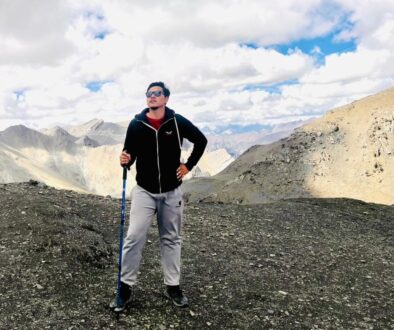
SUSWA team members trek through rugged mountain trails on their way to Mugu Village
Just a month ago, I visited Mugumkarmarong Rural Municipality, exploring Mangri village, Pulu Bazaar, Puwa Village, and most notably Mugu Village, one of the last settlements before Nepal merges into the snow-capped mountains bordering China. Located in the Mugu district of Karnali Province, I had only heard about this place through stories and never imagined seeing it firsthand. Growing up in Kathmandu, this region seemed distant and almost surreal. Fortunately, the SUSWA project gave me the opportunity to visit and experience it personally.
SUSWA has been working in Mugumkarmarong from the very beginning, since Year 1, 2079 (2022). It was one of the first eight rural municipalities where the project started its work on clean water, sanitation, and hygiene. This is not an easy place to reach. There’s no road, no mobile signal, no internet, and no vehicles. To get there, you have to walk for days, through steep hills and changing weather.
Our team hiked for two full days, crossing hanging bridges and narrow paths by cliffs. At one point, I asked myself, “Why am I doing this?” But deep down, I knew. I wanted to see real change. Not just on reels but in real life.
And I did.
Just a few years ago, locals here had to walk for hours to collect water from the Karnali River, which was distant, cold, and sometimes unsafe. Now, in Mugu Village, Puwa Village, Takha Village, and Dolphu Village, they have access to their own taps. Clean, safe water is now available right outside their homes.

SUSWA’s tap at the last village- Mugu
In Mugu village, I observed a mother peacefully washing vegetables outside her home. She wasn’t in a hurry to finish before sunset, nor concerned about the water supply. She appeared calm and dignified. I also talked with young girls who used to carry jerricans filled with water each morning. Now, instead, they carry books. One girl shared her dream of becoming a nurse and returning to assist her village.
Yet, despite this progress, deeper challenges persist. One striking issue I observed was the lack of meaningful participation of women in local decision-making processes. While women were physically present in community discussions, their voices remained unheard. They sat in the meetings but rarely spoke or contributed their perspectives.
At SUSWA, we advocate for at least 50% active and meaningful participation of women in decision-making bodies. However, in Mugumkarmarong, that standard is yet to be fully realized. Access to water has reduced the physical burden, but true empowerment, where women influence decisions and shape their community’s future, is still a work in progress.
We often measure development with roads, electricity, and cement. But sometimes it’s the quiet drip of water from a clean tap that tells the real story.
What also impressed me in Mugu Village was how well people understood the value of safe, chlorinated water. They weren’t just using the taps; they knew why it was important. They talked about health, cleanliness, and even how water can prevent disease. They were proud to say they pay a small tariff for water, because it helps with repairs and maintenance.
In fact, the Water and Sanitation Users Committee recently used their own collected Operation and Maintenance fund to buy a new cartridge candle for the water filter. “We only want to drink chlorinated water now,” they told us. “It’s better for our health.”
And I’ll never forget what the Chharyu Mugu WUSC secretary said:
“We can’t wait for others to look after our health. It’s our responsibility now. You helped build the system, but it’s our job to take care of it.”
That moment made all the difficult walking and climbing feel worth it.
And then there was something else, something personal that I didn’t expect.
As a woman working in development sectors, I was struck by how seen we were just by being there. In one of the last villages, the local women looked at us, three women professionals, with surprise. One woman told me she had never imagined that a woman could do such work. For her, womanhood was tied to home: cooking, marriage, and raising children. She had never seen anything else.
We didn’t give long speeches. We didn’t hold any sessions. We were just present. Visible. Professional. Confident.
And that was enough.
Because representation matters. You can’t dream of something you’ve never seen. And for these women, seeing us meant something shifted. It made the idea of working women real. Possible. Within reach. That, in itself, is change. If we want true inclusive development, then places like Mugumkarmarong are where we must show up, support, and make space for change, even if they’re hard to reach, especially because they are hard to reach.

At top of Puwa Village- Mugu
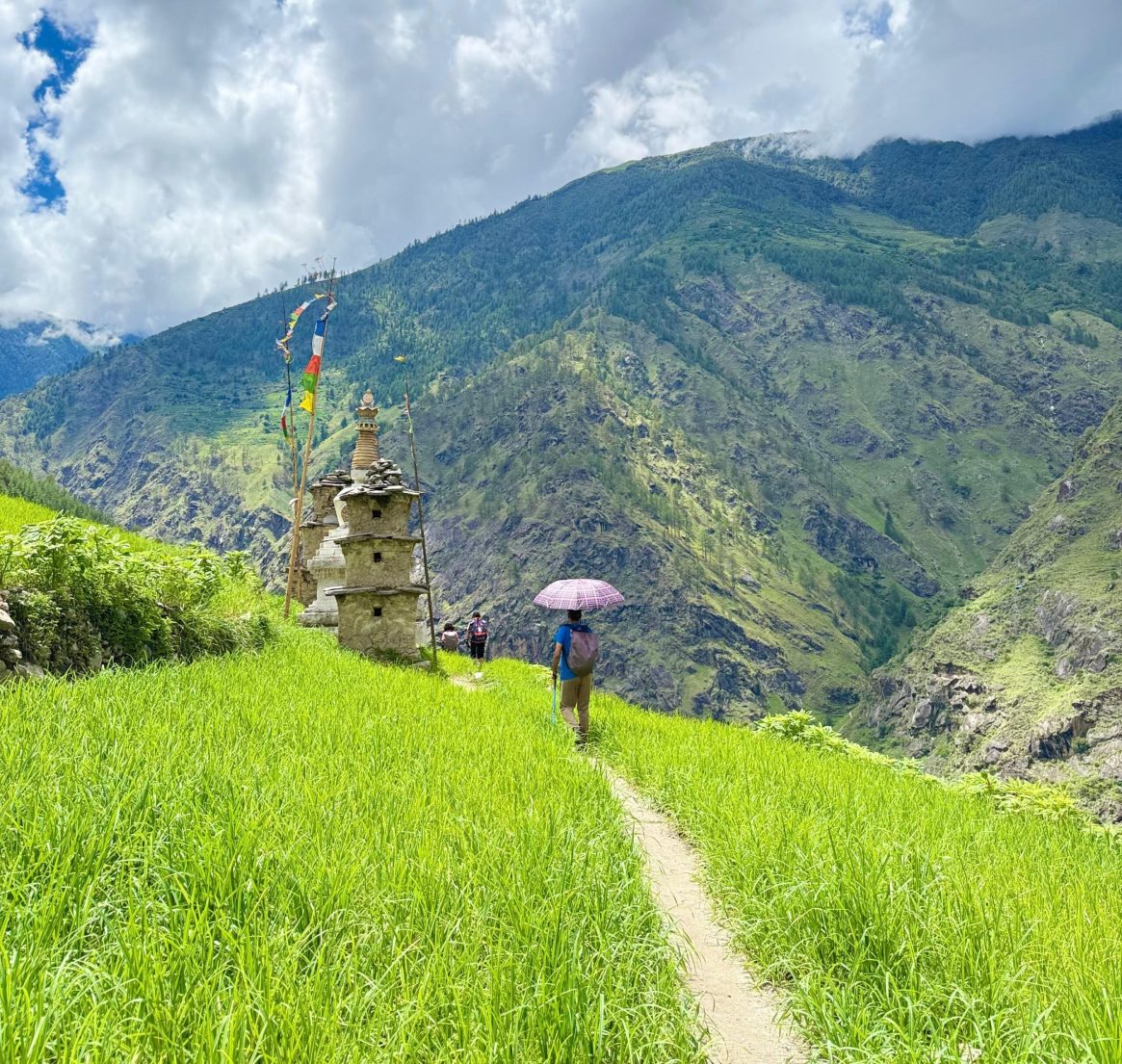
On the journey back from Pulu towards Mangri
There was one more thing that really surprised me.
In many parts of Karnali, menstrual taboos are still common. Women are often forced to sleep outside, not allowed to touch family members, especially men, and are required to stay away from various food and religious spaces during their periods.
But in Mugumkarmarong, I heard something completely different.
“We follow Buddhism,” said Gurun Mengdi Lama from Pulu village. “Our culture has no such restrictions. We never believed in them.” The women here cook, pray, clean, and live freely, even during their periods. No one is forced to sleep outside. Even the men agreed with this.
It was refreshing and empowering to hear.
Of course, earlier it was still hard for women to manage their hygiene during periods, not because of stigma, but because of a lack of water and extreme cold. However, with water now readily available at their homes, things are easier.
One woman from Mugu Village told me,
“Before, we didn’t give much thought to it. But now we know how important cleanliness is. When there is water, everything becomes easier, even managing periods.”
I went to Mugu hoping to find stories.
But I returned with so much more: gratitude, clarity, and a reminder of why this work matters.
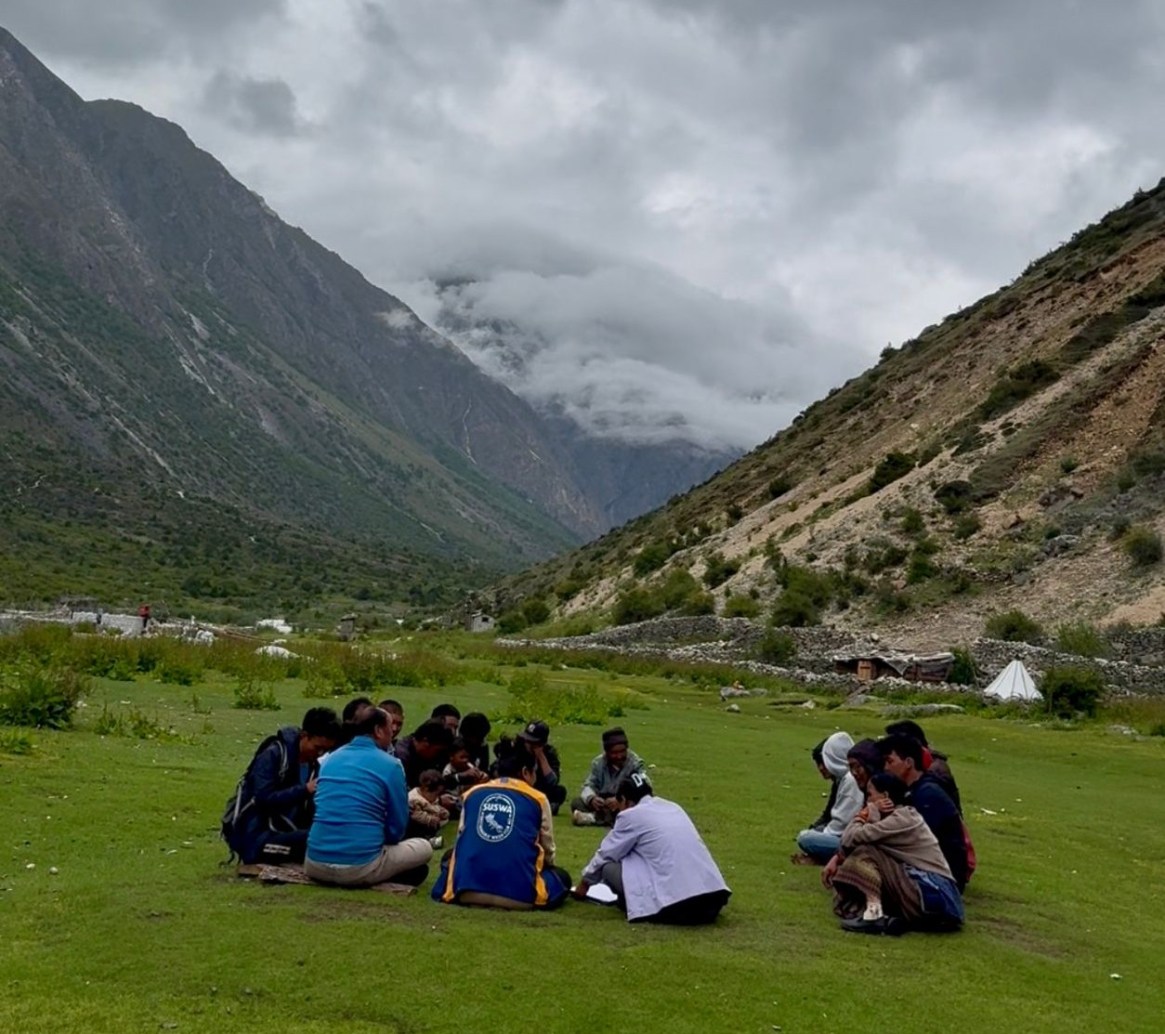
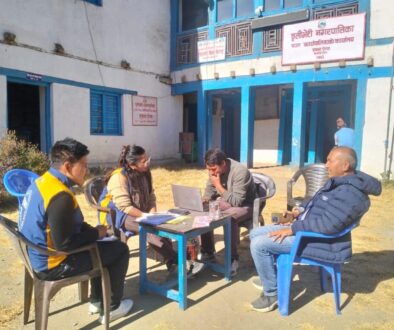
During GEDSI Audit

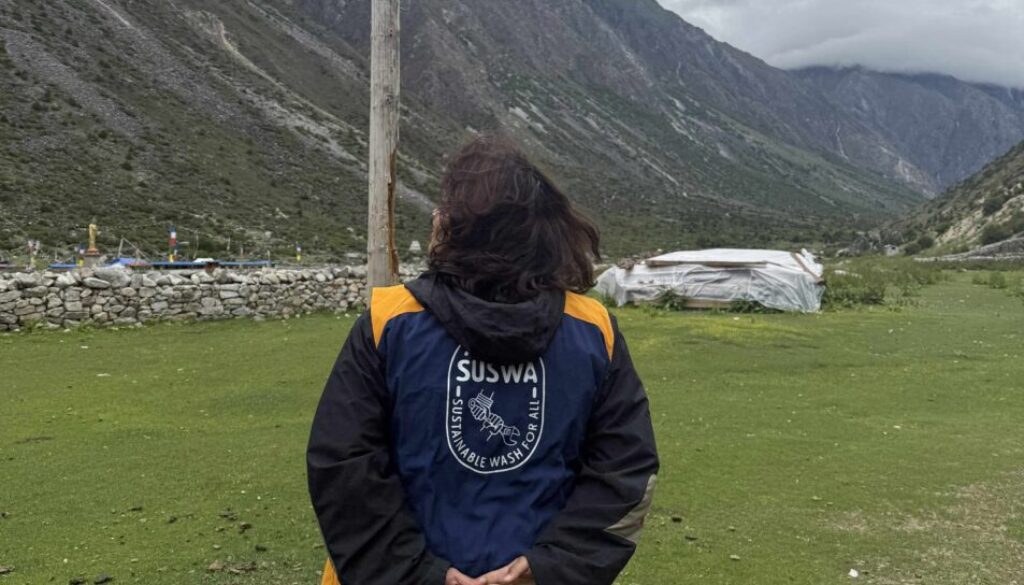
while documenting the experiences of Mugu’s women